
Coffee Processing Innovation: Beyond Traditional Methods
Buenos Dias Everyone!
Coffee has always been a story of tradition. For generations, farmers perfected different coffee processing methods such as the washed, natural, and honey, that define the flavors we know and love. But in today’s specialty coffee world, tradition is no longer the limit. A new wave of innovative coffee processing methods is transforming how coffee is crafted, opening doors to a new spectrum of flavors, higher quality, and new sensory experiences.
-If it’s good for EARTH it’s GOOD for YOU
The Rise of Experimental Coffee Processing
Innovation in coffee isn't just about creating new flavors; it's also about building a more sustainable future. For example, traditional washed processing uses thousands of gallons of water to remove the Mucilage, the sticky fruit layer from the coffee cherry, putting a significant strain on the environment. By embracing new techniques, innovative farms like ours are creating remarkable flavor profiles while protecting our Earths most precious resource: WATER
The Science of Oxygen-Free Fermentation
One of our most groundbreaking techniques is anaerobic fermentation, where coffee cherries are fermented in sealed, oxygen-free tanks. This method is a form of dry processing and is a direct answer to the water-intensive nature of traditional methods.
By sealing the coffee cherries, the fermentation occurs with the fruit's own natural juices. This eliminates the need for large quantities of water, which not only conserves a massive amount of our Earths most precious resource, but also prevents the creation of contaminated wastewater, leaving our communities and ecosystems with cleaner water.
So, what exactly happens in those sealed tanks? Here's a breakdown of the process:
Sucking the air out: Anaerobic means "without air." Just as your muscles create energy during a hard workout when they can't get enough oxygen, this controlled environment removes oxygen, forcing a different kind of fermentation.
Unique Microorganisms: This oxygen-free setting encourages a distinct set of bacteria and yeasts to thrive, which are different from those in traditional fermentation.
Flavor Transformation: These organisms break down sugars and produce unique organic acids, like lactic acid. This process results in a flavor profile that is completely different from traditional methods.
Remarkable Tasting Notes: This unique process can lead to unexpected flavor notes like tropical fruit, dark chocolate, or even a wine-like depth.
How To Do Anaerobic Fermentation For a Small Farmer
You don't need a professional tank, but you'll need the right tools to create a sealed, oxygen-free environment.
Airtight Fermentation Vessel: Use a food-grade container with a lid, like a plastic bucket with a secure snap-on lid or a glass jar with an airlock. The airlock is crucial because it allows carbon dioxide to escape without letting oxygen in.
Coffee Cherries: Use only ripe, red cherries. Unripe or damaged cherries can ruin the flavor and introduce unwanted bacteria.
A Kitchen Scale: Precision is key. You'll need this to measure your coffee and ensure a consistent process.
A Thermometer: Temperature is one of the most important variables to control. A digital thermometer is best for accuracy.
The Step-by-Step Process
This is a general guide. You'll need to experiment with timing and temperature to find what works best for your specific coffee variety and environment.
Preparation: Harvest only the best, ripe cherries. Sort them to remove any that are green, overripe, or damaged. Wash the cherries thoroughly to remove any dirt or debris.
Sealing the Vessel: Place the cherries in your airtight container. Add a small amount of water to create a slurry, but keep it minimal, the goal is to create an oxygen-free environment, not to wash the coffee. Seal the lid and attach the airlock.
Fermentation: Store the container in a cool, dark place. The fermentation time can vary from 12 to over 100 hours, depending on the temperature. A common target temperature is between 15-20°C (60-68°F). The airlock will start bubbling as carbon dioxide is released.
Monitoring: Check the coffee periodically. A sweet, fruity aroma is a good sign. If you notice a foul or rotten smell, the batch has likely gone bad.
Drying: Once fermentation is complete, remove the coffee cherries and spread them out on a raised bed or a clean surface to dry. This process can take weeks, and you need to turn the cherries regularly to ensure even drying. Once the beans are dry, you can remove the outer layer and get them ready for roasting.
Sustainable Processing in Action: Hacienda Iluminada
The experimental methods described above are being perfected in real-world environment. As a sustainable coffee farm in the mountainous region of Maricao, Puerto Rico. We have pioneered a comprehensive system to ensure that every step of our process is environmentally conscious.
Our Water Stewardship Process
At Hacienda Iluminada, we take our environmental responsibility seriously, which is why we’ve developed a unique process for managing our water.
Reduced Water Usage: Instead of traditional washed processing, we rely on a honey process. This uses a minimal amount of water to remove the coffee cherry's skin and pulp while leaving the sticky mucilage layer on the coffee bean. This alone saves a significant amount of water.
On-Site Water Purification: The water we do use for processing goes into a series of on-site purification systems. First, it flows into large sedimentation ponds where gravity naturally pulls the heaviest particles to the bottom.
Gravel Bed Filtration: From there, the water flows through a series of gravel beds. As the water passes through layers of different-sized rock, sand, and gravel, a physical filtering process occurs. The fine particles and remaining organic matter are trapped, leaving the water cleaner as it moves to the next stage.
Natural Bioremediation: Finally, the water enters areas filled with native plants. The roots of these plants, along with the soil, act as a living filter, a process we call bioremediation. This is like having nature's clean-up crew on the job. The roots and soil microbes absorb and break down excess nutrients and contaminants, naturally purifying the water. By the time it has completed this final step, the water has been fully purified and is ready to be safely returned to the environment.

Unique Drying Methods That Transform Flavor
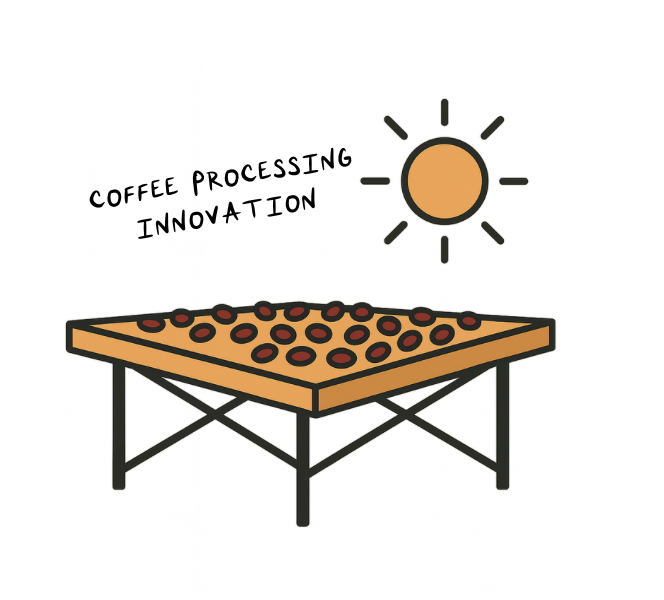
To achieve precision and consistency in drying, coffee producers are turning to “raised beds.” Often referred to as African beds, these elevated structures allow for a percise process that transforms the final flavor of the coffee bean.
Here is a breakdown of the process:
Step 1: Spreading the Coffee: After the fermentation stage, the coffee beans are carefully spread out in a thin, even layer on the mesh surface of the African beds. This is crucial for ensuring every coffee bean receives perfect airflow.
Step 2: Airflow for Even Drying: Because the beds are elevated, air circulates freely from all sides—above, below, and through the coffee beans. This constant and consistent airflow prevents moisture from building up, which is key to preventing defects like mold and off-flavors.
Step 3: Constant Monitoring & Turning: Throughout the drying period, which can last for weeks, the coffee is regularly raked and turned by hand. This ensures that all the coffee beans dry evenly and at a consistent rate, helping to accentuate the coffee's subtle flavors.
This technique not only enhances the quality of the coffee, but also supports a more sustainable process. By using durable, long-lasting materials and preventing spoilage, it reduces waste and the need for constant replacement, which in turn helps to reduce deforestation.
Stop waiting! Step into our fields, our roastery, and our story. Tour spots available now! tap on link below
If it’s GOOD for earth, it is GOOD FOR YOU!
Controlled Fermentation: Precision Meets Creativity
Perhaps the most exciting frontier in coffee is controlled fermentation, a process where we apply microbiology to guide flavor development with scientific accuracy. This is how we are able to create unique specialty coffee that are replicable, year after year.
So, how does it work? By controlling a few key factors:
Specific Microorganisms: Instead of relying on the natural yeasts in the air, we introduce specific, cultivated yeasts or bacteria to the coffee. Just as a brewer uses a specific yeast for an IPA, we choose microorganisms that are known to produce certain flavor compounds. This is how we can encourage notes of tropical fruit, vibrant acidity, or dark chocolate to emerge.
Temperature: Temperature is one of our most important assets. By keeping the fermentation tanks at a precise temperature, we can control how quickly the microorganisms work. A warmer temperature can speed up the process, while a cooler temperature can slow it down, allowing for the development of more delicate and complex flavors.
pH Levels: pH is a critical flavor dial. We constantly monitor the coffee's acidity levels. By keeping the environment within a specific pH range, we can favor the growth of some microorganisms over others, which directly influences the final taste.
This kind of scientific precision is bringing the art of coffee production to a new level, ensuring that each coffee cup becomes a story of innovation.
A Lifestyle That Reflects More Than Coffee
Innovation in coffee processing reminds us that coffee is both tradition and transformation. From anaerobic tanks to unique drying methods, today’s producers are redefining what a cup of coffee can be. Each experimental process is a step toward richer flavors, better quality, and endless possibilities for the future.
We hope to see YOU SOON!
Experience the Best! Visit Puerto Rico’s Premier Coffee Farm!
Come see the Maricao Mountains for yourself. Walk through volcanic soil, listen to the springs that feed the farm, and taste coffee grown with integrity. Whether you’re here for a tour or to take home a bag, Hacienda Iluminada offers a taste of Puerto Rico you’ll never forget.
From our hands on Hacienda Iluminada to your cup, 787 Coffee is on a mission to redefine what it means to drink Puerto Rican coffee.
We grow every single bean ourselves.
We practice real sustainable farming—no greenwashing, just love for the land.
Every sip you take supports local farmers, protects our forests, and keeps our coffee legacy alive for the next generation.
Ready for the trip of a lifetime? Come to Maricao. Walk the fields. Smell the fresh-roasted beans. Feel the heartbeat of Puerto Rico in every single cup.
👉 Ready to taste the tradition? Book your unforgettable Hacienda Iluminada coffee tour today at HaciendaIluminada.com!